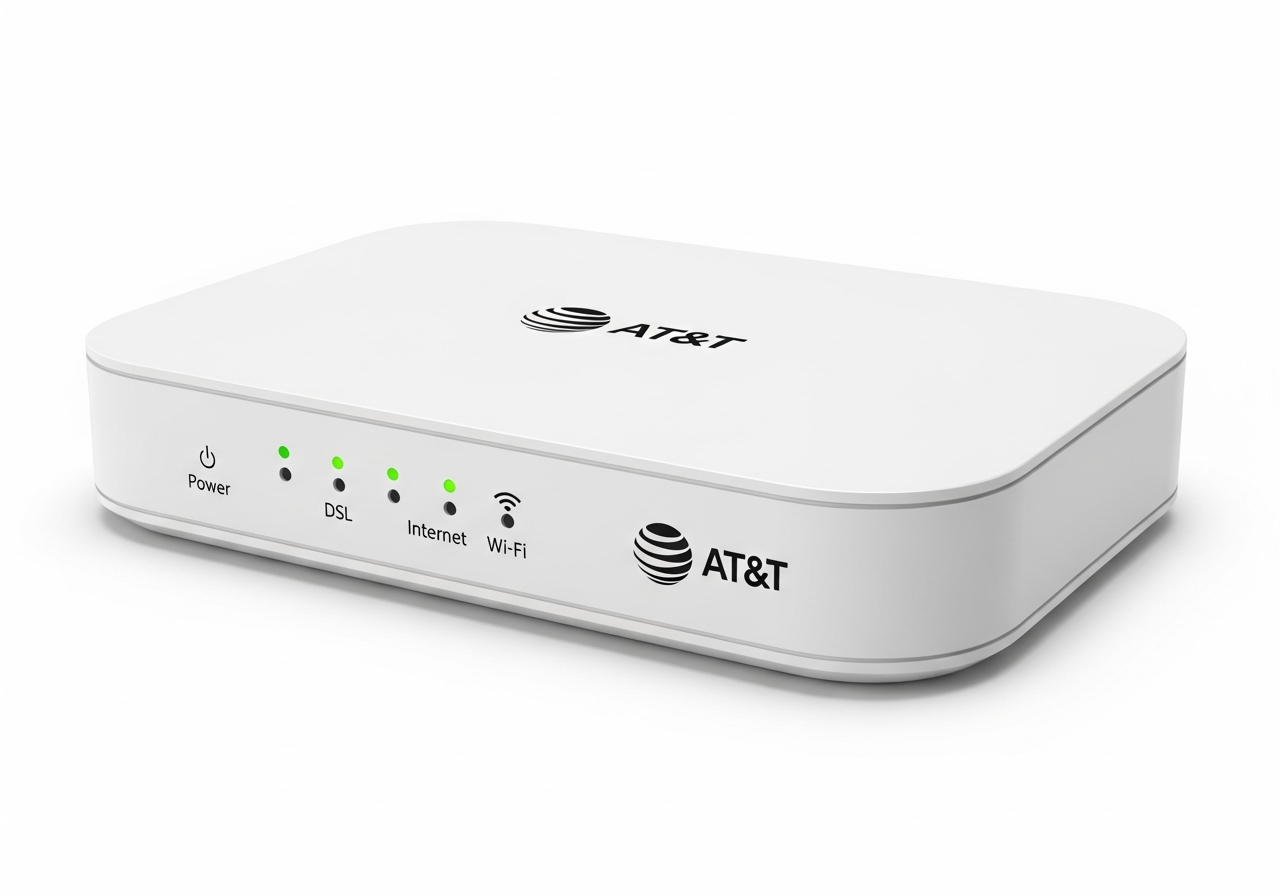
The algorithm scores this router 22/100 - an F. The NVG589 is 2014-era DSL hardware that AT&T stopped actively updating years ago. The F grade is driven by near-zero capability score combined with end-of-support status pulling the structural score down. Clean US ownership is noted - but hardware this old with no updates is unsupported regardless of who made it.
- AT&T is a US company - no Chinese state jurisdiction concerns. Partial ownership credit in the algorithm.
- Decade-old hardware - designed in 2014, when today's threat landscape did not exist
- AT&T no longer actively updates the NVG589 - any vulnerability discovered now will not be patched
- Zero capability score - no WPA3, no network segmentation, no DNS filtering, no modern security features
- Known authentication vulnerability (CVE-2017-14117) - patched at the time, but the patch cycle has since stopped
- Contact AT&T and request a free upgrade to the BGW320 - it scores significantly higher
- End of active support - 2014 hardware: The NVG589 is over a decade old. AT&T no longer issues regular firmware updates for it. Newly discovered vulnerabilities are not likely to be patched.
- Known authentication vulnerabilities: Authentication bypass vulnerabilities were documented in this device. While patched at the time, the patch cadence has since stopped.
- ISP remote management: AT&T has remote management access to this gateway by default.
FCC & Ban Risk
31
/100
D
Supply chain · FCC status · CVEs · Patch support
Security Capabilities
0
/100
F
Zero-Trust · VPN · Segmentation · Monitoring
🏭 Manufacturer
AT&T Inc. (US)
AT&T Services Inc., Dallas, TX · hardware by Pace/Arris
Manufactured in: China (Pace)
🛡️ Patch Support
End of active support
Whether security vulnerabilities are actively being patched
⚠️ Key Finding
high
End of active support - 2014 hardware
Router Security Updates
Get notified if new vulnerabilities are discovered for your AT&T NVG589. Free, no spam.
🔒
Security capabilities comparison
We benchmark your router against Rio Router across 8 dimensions so you can see exactly what gaps exist - and what a fully-covered setup looks like.
AT&T
your router
Rio Router™
full standard
Zero-Trust Device Admission
Every new device is blocked by default - admin must approve it once, even if it has the right password
Locked
Available
Network Segmentation (VLANs)
Devices on your network are isolated from each other, so a hacked smart TV can't reach your laptop
Locked
Available
Router-Level VPN for All Devices
All traffic - including smart devices that can't run VPN apps - is encrypted before leaving your home
Locked
Available
Domain Allowlisting
Block everything except approved sites; more effective than trying to blacklist billions of harmful URLs
Locked
Available
Granular Password Control
Separate passwords per network zone - changing one doesn't affect others
Locked
Available
Guest Auto-Expiry
Guest devices are automatically removed when they leave; neighbors can't reconnect without re-approval
Locked
Available
Clean Supply Chain
Manufactured outside Chinese legal jurisdiction - not subject to China's National Intelligence Law
Locked
Available
Active Threat Monitoring
DNS filtering, firewall, activity logs, and ongoing security patch support
Locked
Available
We use Rio Router as the benchmark because it’s the only consumer router built to score 8/8 on this framework - it shows you what a fully-covered setup looks like, not just what’s typical.
See Rio →
See all AT&T models: AT&T brand overview →
What you should do
1
Contact AT&T and request a gateway upgrade to current-generation hardware
2
If upgrade is unavailable: change all default credentials and disable remote management where possible
3
Place a separate router behind the gateway for additional security
How this was scored · verified March 2026: This rating combines FCC authorization status, manufacturer legal jurisdiction, CVEs from NIST NVD, active patch support status, and CISA advisory mentions. See full methodology →
Reference Data
Other AT&T models
See all AT&T models: AT&T brand overview →
Sources & evidence
All findings trace to publicly verifiable primary sources - US government databases, official FCC filings, and NIST CVE records. No proprietary or anonymous sources are used.
- CVE-2017-14117 · NVD ↗
- AT&T Terms of Service ↗
- FCC Equipment Authorization Database ↗
- FCC Covered List · National Security Designation ↗
Full data source documentation: Scoring Methodology & Citations →