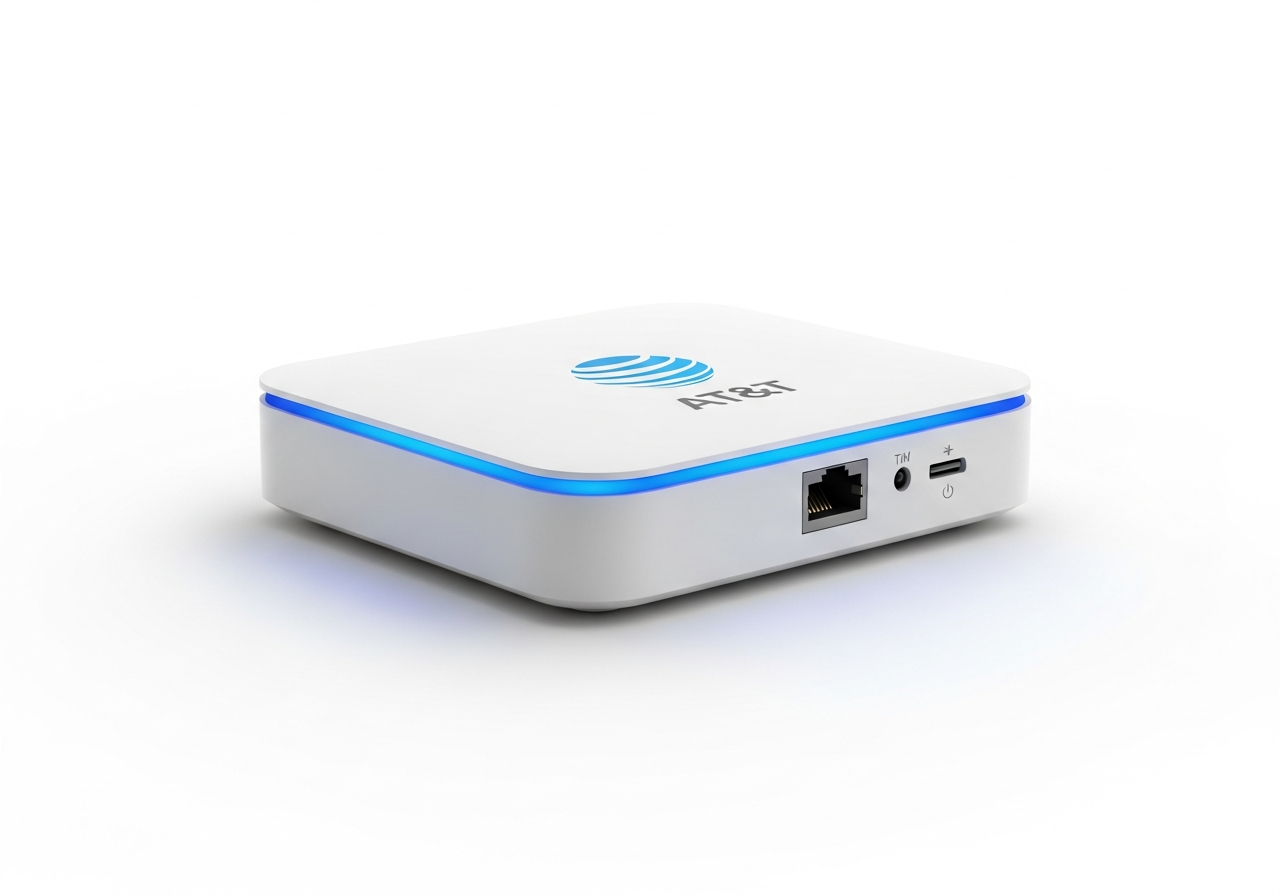
AT&T BGW320
Security Analysis Report

AT&T BGW320

Last reviewed: March 2026 · ismyroutersafe.com

AT&T ISP Gateway Made in South Korea (Humax)
Permanent URL - bookmark it or forward it
B
BETTER THAN MOST
The Verdict

This is one of the better routers on the market — and it still has gaps that matter. AT&T locks many settings. Without router-level VPN or strict network segmentation, your work laptop, banking sessions, security cameras, and any infected smart device all share the same flat network.

A B grade is a relative ranking in a market where the floor is low. The gaps are real, they just aren’t urgent.

  • Every device on your Wi-Fi is exposed to anything that infects one of them — there's no way to segment them

    It affects every device sharing this Wi-Fi — your work laptop, your phone, your kids' devices, your security cameras. Not the most urgent threat on the page, but a real edge an attacker can use to reach the rest.

    Show technical detail

    Limited admin configuration: AT&T locks many settings. You cannot configure advanced firewall rules, custom DNS, or granular device policies.

  • AT&T can change settings on your router without telling you

    Your ISP can access this router remotely to push updates and diagnose issues. This is normal for ISP-owned equipment, but it means there’s another party with admin access to your home network.

    Show technical detail

    ISP remote access: Standard for all ISP gateways: AT&T can remotely access and modify this device.

  • Anyone connected to your Wi-Fi can change router settings without the admin password

    Anyone connected to your Wi-Fi, including guests or compromised devices, could change router settings without knowing the admin password.

    Show technical detail

    Historical gateway authentication bypass: An auth bypass was found in related AT&T gateway infrastructure in 2022. The BGW320 was not directly affected and AT&T patched quickly.
Everything on this network runs through this router
💻 Work laptop & remote access 🏦 Online banking & passwords 📷 Security cameras & smart locks 👧 Kids' devices & school logins 📱 Every phone & tablet at home 🔊 Smart speakers & streaming
FCC & Ban Risk
81 /100 B
Supply chain · FCC status · CVEs · Patch support
Security Capabilities
31 /100 D
Zero-Trust · VPN · Segmentation · Monitoring
FCC & Ban Risk measures supply-chain exposure, government flags, and CVE history. Security Capabilities measures what the router can actually do to protect your network. How we score →
8.2M US homes use this router How we estimated this ↗
Device context
Manufacturer AT&T Inc. (US) — AT&T Services Inc., Dallas, TX · hardware by Humax, South Korea
Country of origin Built in South Korea (Humax)
US gov status FCC authorized — Not in scope
Security patches Managed by AT&T
📋 Things worth keeping in check
1
Keep auto-updates enabled - AT&T's patching is generally reliable
2
Change the admin password from the default printed on the device
3
For more security control, use IP Passthrough with a separate router
4
We built Rio to score 8/8 on this framework. It’s the only router we track that does — and we’d tell you if another one did
Rio goes behind your gateway and handles the Wi-Fi side, where the gaps live
AT&T controls your gateway. Rio gives you the Wi-Fi layer you actually own.
Rio goes behind your AT&T gateway and handles your Wi-Fi — the side where the security gaps live. AT&T keeps your internet connection. You get a modern, independently-secured network with all 8 dimensions covered.
See how Rio fits behind your gateway ↗
No new internet plan · Keep your AT&T service · No AT&T ISP approval needed · Free US shipping · 30-day money-back
🔒 Security capabilities comparison
Here's how your router compares to Rio across the 8 dimensions we built our framework around. (Yes, we made Rio.)
AT&T
your router
Rio Router
full standard
Zero-Trust Device Admission
Every new device is blocked by default - admin must approve it once, even if it has the right password
Locked
Available
Network Segmentation (VLANs)
Devices on your network are isolated from each other, so a hacked smart TV can't reach your laptop
Partial
Available
Router-Level VPN for All Devices
All traffic - including smart devices that can't run VPN apps - is encrypted before leaving your home
Locked
Available
Domain Allowlisting
Block everything except approved sites; more effective than trying to blacklist billions of harmful URLs
Locked
Available
Granular Password Control
Separate passwords per network zone - changing one doesn't affect others
Partial
Available
Guest Auto-Expiry
Guest devices are automatically removed when they leave; neighbors can't reconnect without re-approval
Locked
Available
Clean Supply Chain
Manufactured outside Chinese legal jurisdiction - not subject to China's National Intelligence Law
Available
Available
Active Threat Monitoring
Real-time detection of suspicious device behavior, unusual traffic patterns, and known attack signatures on your network
Partial
Available
Rio scores 8/8 — we built it to hit every dimension on this framework. Know a router that does? Tell us and we’ll add it. Get Rio →
Rio goes behind your gateway and covers every gap on this list.
No new internet plan · Keep your AT&T service · No ISP approval needed
See how Rio fits ↗
How this was scored · verified March 2026: This rating combines FCC authorization status, manufacturer legal jurisdiction, CVEs from NIST NVD, active patch support status, and CISA advisory mentions. See full methodology →
Check your live network too BETA

The report above is based on your router’s model record. This optional check runs live probes against your current network to detect DNS hijacking and admin interface exposure — things static analysis can’t catch.

🔍
DNS HIJACK CHECK
Detects if your DNS has been silently rerouted to intercept your traffic
🌐
WAN EXPOSURE
Tests if your router admin panel is reachable from outside your home
No data stored · Runs entirely in your browser · ~5 seconds
Reference Data
Other AT&T models
BGW210FLimited - aging hardware
NVG589FEnd of active support
NVG599FLimited - aging hardware
Sources & evidence
All findings trace to publicly verifiable primary sources - US government databases, official FCC filings, and NIST CVE records. No proprietary or anonymous sources are used.
  1. AT&T Terms of Service ↗
  2. CVE-2022-31793 (infrastructure context) ↗
  3. FCC Equipment Authorization Database ↗
AT&T does not publish a public security patch log or end-of-life schedule for residential gateways. Patch status on this page is inferred from firmware release notes and third-party security advisories.
Full data source documentation: Scoring Methodology & Citations →
🦾 Rio goes behind your gateway and closes the gaps — no new internet plan. See Rio Router →